Guides
UGC creator production setup as practitioners see it
A UGC creator production setup is a camera, a light, a microphone, a phone tripod and a repeatable edit path, chosen around the formats you actually sell.
What to take away
- A phone on a tripod with a window behind it beats a borrowed cinema camera you cannot operate twice the same way.
- Match the setup to the deliverablevertical 9:16 for paid social, 16:9 for a brand's YouTube pre-roll.
- Keep a written disclosure line in every script, because the FTC endorsement guides apply to the creator who posts, not only the brand.
- Log gear, settings and light position per shoot so a client can order the same look again.
A UGC creator production setup is a phone, a clamp, a light, a lavalier mic and a repeatable edit path. Practitioners choose it around the formats they sell.
This article covers UGC creator production equipment and workflow in general terms. It is not legal, tax or safety advice for your circumstances. For disclosure wording, contract terms or usage rights, consult a licensed attorney; for tax treatment of what you earn, consult a CPA.
Phone cameras, camera bodies and settings
Most paid UGC is shot on a phone. Any recent phone that records 4K at 30 or 60 frames per second will do. An iPhone 15 or 16 or a Pixel 8 or 9 is an example of that class, not a requirement. The phone sits in a clamp on a tripod.
That is the working standard because the client's ad runs on a phone screen.
Two things matter more than the sensor. Lock exposure and white balance before you roll, so take two matches take one. Shoot vertical 9:16 by default and keep a 16:9 framing pass for brands that want a YouTube cut.
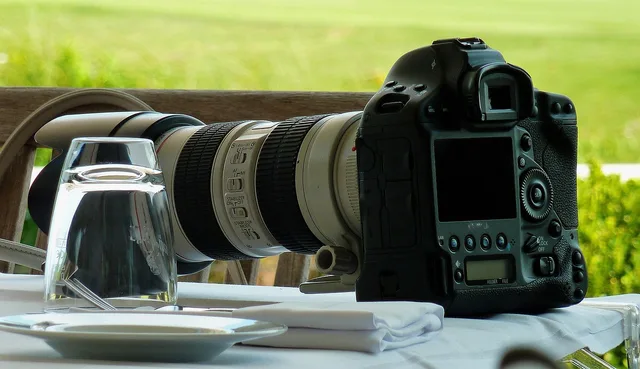
A dedicated camera earns its place only when a client asks for shallow depth of field or log footage for color grading. A Sony ZV-E10 or a Panasonic Lumix G-series body with a fast prime lens does that.
A used Sony ZV-E10 body typically runs $500 to $700, and a used Lumix G7 body often runs $300 to $450. A 25mm f/1.7 or 35mm f/1.8 prime typically runs $150 to $400. If you cannot set it up the same way twice, it costs you more than it returns.
Key lights, lavaliers and room tone
Light is the difference between a usable ad and a reshoot. A 60 cm softbox or a small LED panel with a diffuser, placed at 45 degrees to your face, gives the soft, even look brands expect. A second panel behind you separates you from the wall.
Common kit includes the Aputure Amaran 100d, Godox SL60W and Neewer 660 LED. Typical prices run $70 to $200 for a panel and $100 to $250 for a softbox kit. Window light works when it is consistent. It is not consistent at 4 p.m. in November. Budget for one artificial key light before you budget for anything else.
Sound: a lavalier clipped at the collar, plugged into the phone or a compact recorder, removes the room from the take. Rode, DJI and Sennheiser all make clip-on systems at consumer prices.
No lav yet? Record the audio on a second phone in voice memo mode just off camera. Clap once at the top so the two files sync, and keep the phone's built-in mic track as the fallback.
The Rode Wireless GO II, DJI Mic 2 and Sennheiser Profile Wireless are common picks; typical kits run $200 to $350. Record 30 seconds of room tone at the top of every session so an editor can fill gaps.
Space, tripods and the edit path
You do not need a studio. You need a corner with a plain wall, a door that closes, and a surface at chest height for product shots. A tabletop tripod, a phone clamp and a small LED panel fit in a backpack, which is what a shoot day on location actually requires.
Common tripods include the Joby GorillaPod, Manfrotto Compact Light and Neewer 72-inch tripod, with typical prices from $20 to $70. A phone clamp often costs $10 to $30. A compact LED panel often costs $30 to $80.
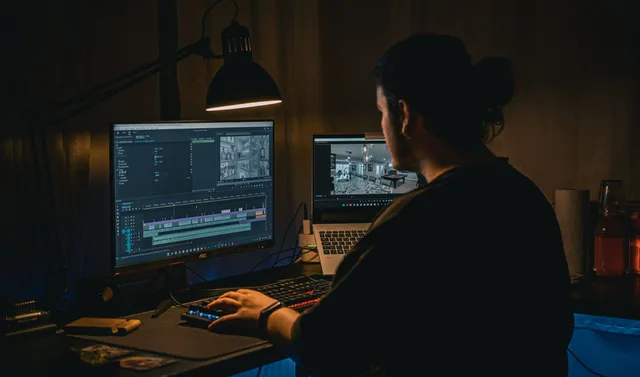
Software: CapCut and Adobe Premiere Pro cover most creator work. CapCut handles fast vertical cuts and captions. Premiere fits brands that want project files or specific codecs.
DaVinci Resolve is another option, with a free version and a $295 Studio license. Keep a project template with your title safe margins, caption style and export preset saved, so delivery is a click rather than a rebuild.
Disclosure built into the shoot
The FTC Advertising FAQs set out the working rule: claims must be truthful and supported, and a material connection must be disclosed clearly and up front.
Build that into production rather than bolting it on. Put the disclosure in the script, say it in the first seconds of the video, and keep the on-screen text visible long enough to read. A hashtag buried under twenty others is not a disclosure.
| Deliverable | Aspect | Typical gear | Disclosure placement |
|---|---|---|---|
| Paid social ad | 9:16 vertical | iPhone or Pixel, Rode Wireless GO II, Amaran 100d key | Spoken in first 5 seconds, on-screen text |
| Brand YouTube pre-roll | 16:9 | Sony ZV-E10 or phone, lav, two lights | Spoken intro, description line |
| Product demo | 9:16 or 1:1 | Phone on tripod, tabletop light | On-screen text over demo |
| Testimonial | 9:16 | Phone, lav, soft key | Spoken, plus caption |
| Instagram Reels ad | 9:16 | Pixel, DJI Mic 2, Neewer 660 LED | Spoken in first 5 seconds, on-screen text |
| TikTok Spark Ad | 9:16 | iPhone, Sennheiser Profile Wireless, Godox SL60W | Spoken, on-screen text, brand tag |
| 15-second paid cut | 9:16 | Phone, lav, one key light | Spoken in the first 3 seconds, on-screen text |
Keeping the setup repeatable
Run the same setup order every shoot:
- Micclip the lav at the collar and check levels on the phone.
- Lightkey at 45 degrees, chest height, diffusion on.
- Tripodphone in the clamp at eye level.
- Frame checkconfirm 9:16 and headroom before you roll.
Room tone: 30 seconds of silence, no talking. 6. Disclosure: say the line on camera in the first seconds.
Write down what you used. The setup includes several items:
- Camera
- Lens
- Frame rate
- Light position
- Mic
- The export preset
Example log, filled in for a phone shoot:
Field / Example
- Camera
- iPhone 15 or newer, 4K
- Lens
- built-in 1x wide
- Frame rate
- 30 fps
- Light position
- key 45 degrees left, chest height
- Mic
- Rode Wireless GO II at the collar
- Export preset
- 1080 x 1920, H.264
That note is what lets you quote a reshoot without guessing, and it is what a brand means when it asks whether you can match the last batch. A run shot at the wrong aspect ratio is a reshoot with the same product on the table. Check the frame before the client does.
Common questions
Do I need a camera, or is a phone enough?
A phone is enough for most paid social work, and it is what most brands expect to see in a vertical ad. Buy a camera when a client's brief asks for shallow depth of field, log footage or a specific codec. If you are weighing that gear spend against the business side of things, UGC creator business market entry for new owners covers what to sort out before you scale up.
What should I buy first?
A microphone, then a light, then a tripod. Bad audio makes a video unusable in a way that soft lighting does not, and both are cheaper than a camera body. For UGC creator production setup, the Occupational Safety and Health Administration: Safety Management page covers workplace safety, not camera kit. The buy order above stands.
How do I keep shoots consistent?
Log settings and light position for every session, and save an export preset per deliverable. Consistency is what makes a reshoot a quick job rather than a new production.
What does a starter UGC setup cost?
A phone you own costs nothing extra. A phone clamp and tripod typically run $20 to $70. A lavalier kit such as the Rode Wireless GO II, DJI Mic 2 or Sennheiser Profile Wireless typically runs $200 to $350. One LED panel or softbox kit typically runs $70 to $250.
Software costs less. CapCut has a free tier. Adobe Premiere Pro single-app lists around $23 per month as of 2026. DaVinci Resolve is free with a $295 Studio license. Those are typical US prices, not quotes.
Where do disclosure rules come from?
The FTC's endorsement guides and Advertising FAQs. They apply to creators as well as brands, and the requirements vary with the claim and the medium, so have a licensed attorney review your standard wording.